

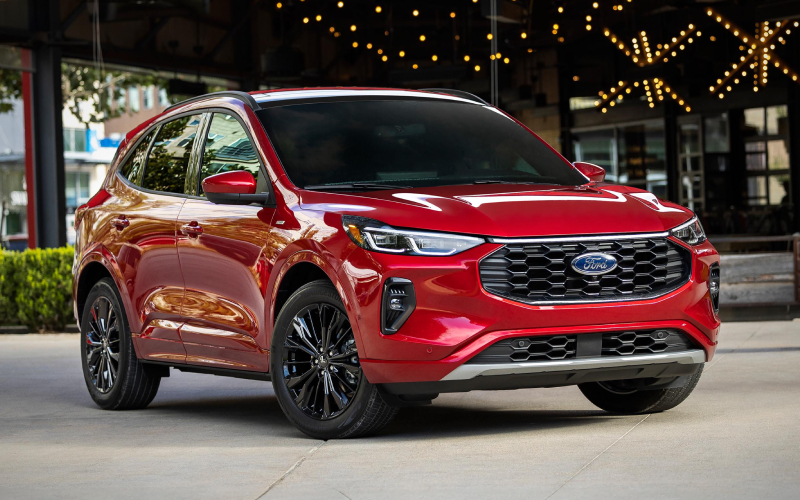
Lasco Ford - Plug-in hybrid or traditional hybrid for Brighton, MI commutes — Should you choose the 2026 Ford Escape or 2026 Honda CR-V?
Among compact SUVs, one question comes up over and over: is a plug-in hybrid SUV better than a traditional hybrid for everyday commuting and weekend errands around Brighton, MI? The short answer is that it depends on your daily distance and charging access—and this is where the Ford and Honda diverge in notable ways. Ford offers a plug-in hybrid variant of the Escape that can drive on electricity alone for many short trips, then seamlessly transitions to hybrid operation for longer drives. The Honda CR-V’s hybrid is efficient and responsive, but it cannot be plugged in to charge and therefore does not offer EV-only driving on demand. If your routine includes a mix of short city trips and occasional road trips, the plug-in approach can significantly reduce fuel use while keeping flexibility for longer travel.
Think about daily patterns first. If you regularly drive under the Escape Plug-In Hybrid’s EV range and can charge at home overnight, your weekday miles can be primarily electric, with the gas engine serving as backup for spontaneous plans. If you can’t charge at home or often drive beyond that range without access to workplace charging, a traditional hybrid like the CR-V can still deliver smooth, efficient operation without any change to your routine. Both SUVs support all-wheel drive options for confident winter traction, and both include robust driver-assist suites—Ford Co-Pilot360 on the Escape and Honda Sensing® on the CR-V—so the difference really comes down to how you prefer to power your drive.
- Daily miles vs. EV range: If most trips fall within EV range, the Escape Plug-In Hybrid maximizes electric driving.
- Charging access: Home or workplace charging favors the plug-in Escape; no charging access favors the CR-V Hybrid.
- Long trips: Both switch to gasoline power for extended drives; the Escape PHEV runs as a hybrid after using EV range.
- Winter readiness: All-wheel drive is available on both lineups for cold-weather confidence.
- Tech preferences: The Escape offers a large SYNC 4 touchscreen, while select CR-V trims offer Google built-in.
When it comes to traction and stability in winter, both SUVs offer confidence-inspiring systems. The Escape provides available all-wheel drive that engages seamlessly as conditions change, while the CR-V’s Real Time AWD™ is available across the lineup and standard on select hybrid trims, helping you maintain control on slushy mornings. For driver assistance, both bring advanced features to the table; Ford’s available Intelligent Adaptive Cruise Control with Lane Centering excels at steady highway guidance, and Honda Sensing® offers comparable support, including Traffic Jam Assist for low-speed congestion. On the infotainment front, the Escape’s available 13.2-inch SYNC 4 touchscreen and available 12.3-inch digital cluster deliver a modern, high-visibility cockpit; the CR-V counters with a clean interface and, on the Sport Touring Hybrid, Google built-in for native mapping and voice features.
Still deciding which path fits your life? It can help to map a typical week. Count the number of trips under the Escape PHEV’s EV range and identify where a Level 2 charger could fit at home or work. If most days include short hops—school runs, gym visits, grocery stops—the plug-in hybrid can turn routine miles into quiet, electric driving. If your schedule is unpredictable and charging isn’t practical, the CR-V Hybrid’s conventional approach is effortless and efficient without additional setup. Both SUVs deliver strong resale reputations and wide service networks, so you can choose based on how you’ll use the vehicle rather than worrying about support. For tailored guidance, test-drive both powertrains back-to-back and pay attention to how each responds in stop-and-go traffic and at highway speeds. The differences in electric assist, noise levels, and power delivery become obvious after just a few miles.
Lasco Ford is here to help you compare these systems in real-world scenarios, from cold starts to highway merges to quick-charge routines. Our team is serving Grand Blanc, Brighton, and Hartland with product walkarounds that explain charging options, trip-planning strategies, and how Ford’s plug-in hybrid system manages energy for reliable performance year-round.
Frequently Asked Questions:
Can I take a plug-in hybrid on long road trips?
Yes. After using its EV-only range, the Escape Plug-In Hybrid operates as a conventional hybrid, so you can refuel at any gas station and continue your journey as usual.
Will winter temperatures reduce EV range for a plug-in hybrid?
Cold weather can affect battery efficiency in any electrified vehicle. Preconditioning while plugged in and using seat heaters can help preserve range on cold mornings.
Is the CR-V Hybrid better if I cannot install home charging?
If home or workplace charging isn’t feasible, a traditional hybrid like the CR-V makes a lot of sense because you get hybrid gains without changing your routine.
